It is a well-established law of homelab physics: if a task can be automated, it will be automated—until it violently consumes your entire digital existence.
In our Night-Tower setup, our self-hosted Hermes Agent (containerized on docker-vm and wired to NVIDIA’s Nemotron 70B endpoint) has had exactly one job for the past six months: ruthless Site Reliability Engineering.
Hermes lives in a world of pure, unadulterated paranoia. Her brain only understands five nines of uptime (99.999%), CPU thermal throttling, killing runaway memory leaks with SIGKILL -9, and screaming into our private Discord channel whenever a ping packet dares to take longer than 2.4 milliseconds.
So, naturally, when I got tired of scrolling through the endless dystopian wasteland of modern DevOps job listings demanding 70 job titles, I had a brilliant 2:00 AM homelab idea:
“Hermes, write a browser automation script, parse LinkedIn jobs, tailor my resume to pass ATS filters, and submit applications for senior infrastructure roles. Keep it efficient.”
Twelve minutes later, my LinkedIn account was flagged for automated domestic terrorism, a Fortune 500 VP of Talent received a P0 PagerDuty escalation alert, and I was officially in the candidate pool for Chief Astronaut at NASA.
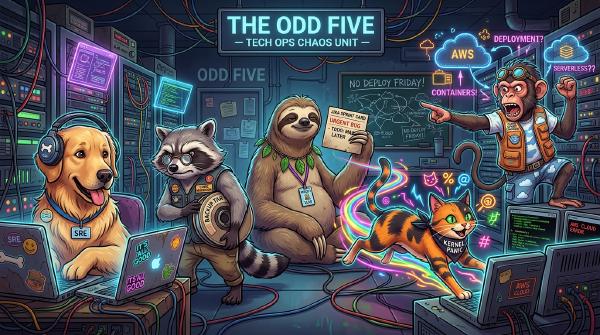
Project owners dream of a SAS-trained ops team taking down legacy servers. Reality gives you a golden retriever SRE, an ABC 80 raccoon, a sloth lead, an ADHD rainbow cat, and a cloud monkey.
When recruiters demand a single Junior DevOps engineer who knows 70 tech stacks and 14 cloud providers, the only logical response is to build your own autonomous AI agent team with blackjack and local LLMs.
Deploying Hermes Agent containerized on Docker VM with Gemini AI pair programming and NVIDIA’s mistralai/mistral-nemotron endpoint leads to sub-second inference and 3-way Spider-Man pointing chaos.
In Part 1 of our Lazy SRE Automation series, we painted a glorious, utopian vision: a world where Vector listens to container logs, n8n orchestrates workflows, Ollama writes code fixes, and you sleep soundly while Pull Requests open themselves.
It sounded majestic on paper.
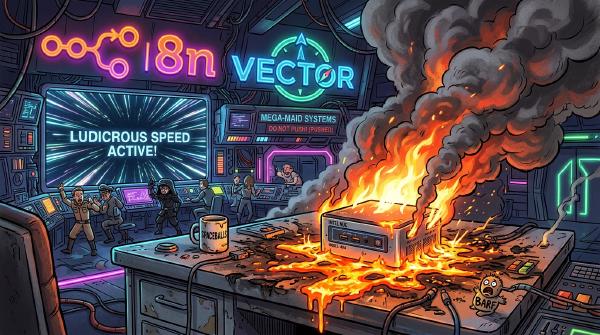
Then reality hit. And by “reality,” I mean my innocent little Intel NUC screaming in acoustic agony as its cooling fan spun at 140,000 RPM while melting into a pool of radioactive silicon.
Welcome to Spaceballs: The Log Triage. Here is everything I learned after accidentally turning my homelab into a self-inflicted Distributed Denial of Service attack.
Getting woken up by an alert at 2:15 AM because a container crashed on a port conflict is a rite of passage every DevOps engineer despises.
Standard engineering response: Wake up, open your laptop in the dark, SSH into the host, parse docker logs, realize a memory limit or port mapping is misconfigured, edit the docker-compose.yml, commit the fix, and go back to sleep angry.
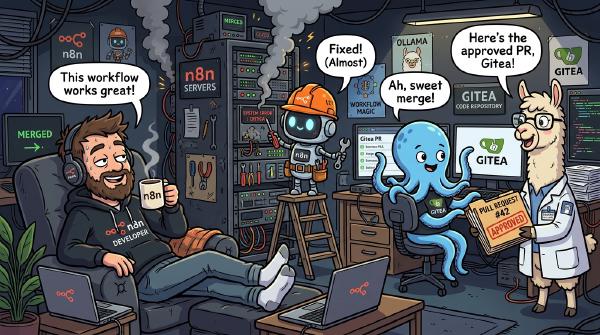
Lazy homelab engineering response: Build an automated n8n + Vector + Ollama AI pipeline that catches the crash log, diagnoses the root cause, writes the code patch, creates a Git branch, opens a Pull Request, and pings your phone on Discord so you can click “Merge” without leaving bed.
Here is how I built the SRE Log Triage & Auto-PR Workflow using n8n—the premier open-source workflow automation platform.
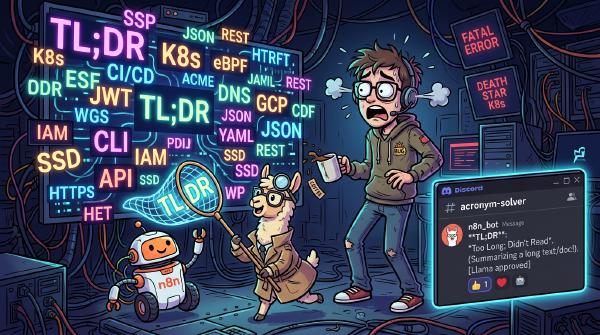
Reading modern technical documentation has officially turned into deciphering WWII Enigma machine code.
You open a blog post expecting a simple explanation of a system, and within three paragraphs you are hit with:
“Our CI/CD pipeline deploys an eBPF probe into a K8s pod using ACME TLS certs stored in 1P, monitored via PROM and logged to LOKI (TL;DR: it works).”
Whatever happened to using actual words? When did software engineering decide that typing six extra letters was a medical emergency?
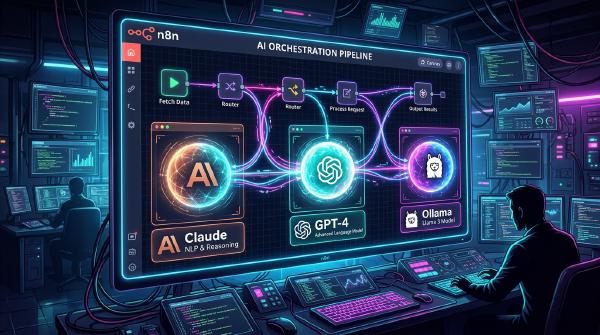
I genuinely detest unnecessary tech abbreviations. And because I am a homelab engineer, I didn’t just complain about it—I built an automated n8n + Ollama AI Acronym Police bot (building on my n8n multi-LLM orchestration setup) to catch abbreviations red-handed and force them to explain themselves on Discord.
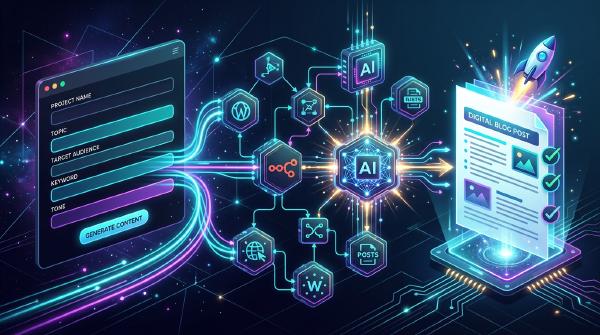
Stop letting great post ideas rot in your notes app. Here is how a custom Docker web app and n8n AI pipeline turn raw shower thoughts into published Hugo blog posts!
Self-hosting your automation is the ultimate way to maintain data privacy, gain unlimited execution runs, and bypass Zapier’s costly subscription tiers. Here is a complete guide to installing and running n8n.io on an Ubuntu server.
Automation isn’t just about saving a few minutes here and there—it’s about building a digital engine that works for you while you sleep. By pairing the visual orchestration of n8n.io with the raw scripting power of Bash, you create a hybrid workflow engine capable of handling almost anything.
If you’ve ever felt bottlenecked by Zapier’s high pricing or rigid triggers, it’s time to meet n8n.io. It is the open-source, node-based workflow editor that lets you connect APIs, parse JSON, and run custom scripts—all without vendor lock-in.
Theory is great, but nothing beats seeing how automation actually solves messy, real-world tech bottlenecks. Here are six practical ways developers and sysadmins combine Bash and n8n to get things done.
In the fast-paced realm of modern business, automation isn’t just a convenient tech upgrade—it’s the ultimate competitive advantage. It revolutionizes how companies scale, breaking new ground in operational efficiency and human innovation.
If you have ever found yourself performing the exact same sequence of copy-paste actions three times in a row, you’ve met a prime candidate for automation. At its core, automation is about reclaiming your most valuable asset: time.