
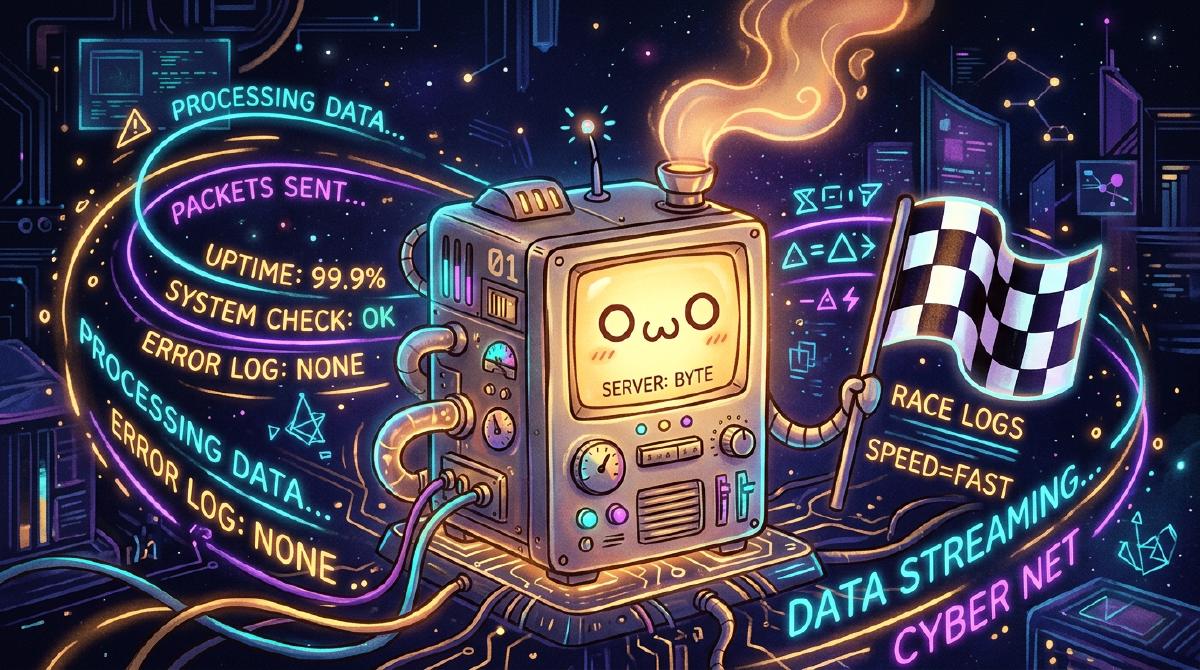
Have you ever paused mid-debug, leaned back in your mesh chair, and thought: “If my brain had a console, what error code would it be spamming right now?”
Burnout in the tech world is usually talked about with heavy sighs, hushed tones, and clinical lecture slides. But let’s drop the guilt trips for a moment. What if we looked at burnout not as a catastrophic personal failure, but with genuine wonder, curiosity, and a healthy dose of absurdity?
1. The Missing /var/log/system.log for Human Brains#
When a Linux server starts acting up, we don’t sit in a dark room wondering about its childhood trauma. We do what any rational engineer does:
tail -f /var/log/system.log | grep -i "panic"Within three seconds, the terminal prints out the precise truth:
[ERR] OutOfMemory: Kernel killed process 'will_to_work' (PID 404)
[WARN] Thermal throttling engaged: Coffee intake exceeded safety threshold (8.5 cups)
[INFO] Recommended resolution: Go touch grass immediately.In real life? There is no /var/log/system.log.
You wake up on a Tuesday feeling like a wet paper towel, and your internal diagnostic tool outputs nothing more than a vague General Protection Fault at 0x0000SOUP.
Why can’t our bodies just issue clear stack traces? Imagine receiving a notification: “Warning: Exhaustion caused by line 4,102: Saying ‘Yes, I can take on another ticket’ while already working 60 hours.”
Until someone writes a systemd service for human soul maintenance, we have to accept that our internal bugs are part of the mystery. And honestly? That’s okay.
2. Nostalgia vs. Knowledge: The Fear Threshold#
Cast your mind back to when you first discovered computers and the internet.
Remember the magical sound of a 56k dial-up modem? The sheer wonder of building a hideous HTML page on GeoCities with glowing green text, animated fire GIFs, and a background MIDI playing on loop? Back then, every click was an adventure into the unknown.
Early Days: "Holy cow! I pressed a button and a picture of a cat loaded from Japan!"
Present Day: "If I don't update this sub-dependency of a sub-dependency, an anonymous actor in another hemisphere will extract my SSH keys and leak my browser history."When you started, you didn’t know about zero-day vulnerabilities, memory leaks, or race conditions. You were just playing in a digital sandbox.
The fear you feel today isn’t a defect—it’s respect for complexity. The wonder hasn’t vanished; it’s just buried under layers of production responsibility. Reclaiming that wonder means occasionally stepping away from the architecture diagrams and remembering the kid who just wanted to make a button turn blue.
3. Where is the Burnt Tire Smell & The Handkerchiefs?#
Let’s address the biggest linguistic false advertising in modern history: Why is it called “Burnout”?
In classic motor culture—think American Graffiti—a burnout is a glorious, theatrical ritual. A souped-up 1932 hot rod revs outside a neon drive-in diner, thick white clouds of rubber smoke billow into the night sky, and car hops on roller skates cheer while waving checkered flags and silk handkerchiefs in awe.

Now look at tech burnout:
- Expected: Screeching tires, smell of burnt rubber, dramatic fanfare, pit crew celebrating your heroic effort.
- Reality: Staring blankly at a blinking cursor in VS Code for 45 minutes, wondering if you should quit tech to become an artisanal sourdough baker.
If you’ve hit burnout, you ran your engine at redline for a long time. You pushed hard, took on the curves, and gave it everything. You might not get a crowd throwing silk handkerchiefs, but you do get to pull into the pit stop, shut down the engine, and let the radiators cool.
4. AI-Induced Acceleration: Hyper-Drive or Hyper-Distraction?#
And then, right when we were trying to figure out how to keep up with the normal pace of tech, Artificial Intelligence entered the chat.
If tech burnout was already a high-speed race, AI is like strapping a nitrous booster to a lawnmower. Suddenly, you can prototype three microservices, generate full architecture docs, and outline complex systems before your morning coffee even gets lukewarm.
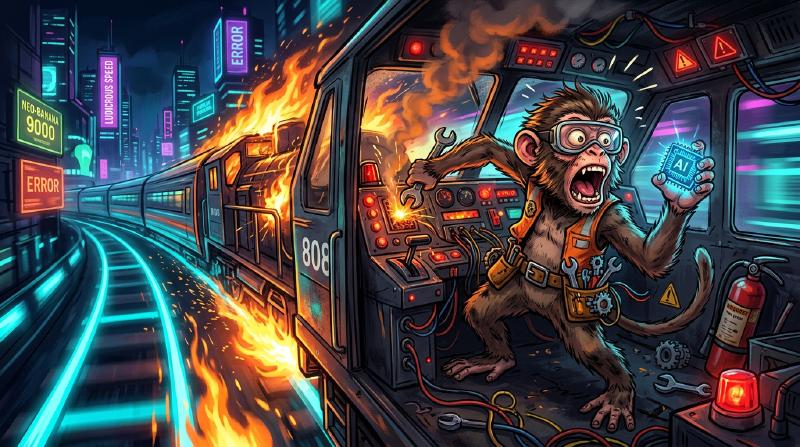
For an overdrive ADHD mind, this is equal parts intoxicating and terrifying. It’s like handing someone with a thousand hyper-fixation ideas a magic wand that actually works.
The AI Paradox: Is AI going to supercharge my overdrive ADHD mind to build entire digital worlds at thought-speed, or is it going to spell my doom with a happy, polite, and overwhelmingly accommodating paragraph?
I guess we will have to find out.
Instead of fearing the acceleration, maybe the trick is curious observation. If an AI assistant can write your boilerplate, debug your logs, and polish your docs, it can also hold down the fort while you step away for a breath of fresh air. Use the speed to buy back your human time—not just to double your ticket velocity.
The Pit Stop Protocol#
Burnout isn’t something to feel guilty about. It’s simply your system’s way of forcing a scheduled maintenance window.
- Accept the Unlogged State: You don’t need a 50-page root-cause report to justify taking a rest.
- Embrace the Absurdity: Laugh at the fact that we built hyper-complex global networks just to send each other memes.
- Take your Pit Stop: Turn off the terminal, close the IDE, and smell something other than thermal paste.
What does your internal system.log say?#
If your brain printed out an error message right now, what would it be? Have you ever missed the innocent early days of the web? Drop your favorite nostalgic tech memory or your best brain log in the comments below! 🏁