It all started with an innocent, reasonable goal on a lazy Saturday afternoon:
“I just want to test ArgoCD in my homelab.”
That’s it. Just install ArgoCD, hook up a sample repo, and watch green synchronization badges light up like a digital Christmas tree as declarative GitOps magic takes over my local Kubernetes cluster.
A 30-minute side quest. tops.
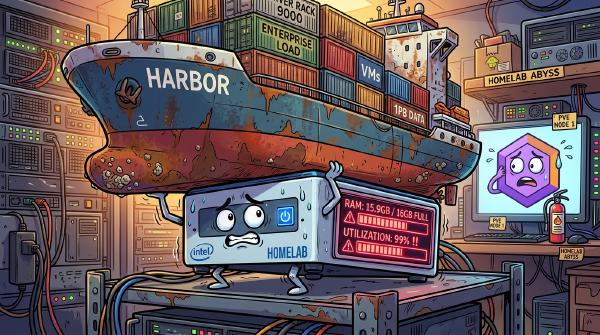
The Golden Law of Homelab Yak Shaving: No homelab project ever stays within its original scope. A simple software trial will inevitably expand until it consumes your weekend, your RAM, and your will to live.
Deploying Hermes Agent containerized on Docker VM with Gemini AI pair programming and NVIDIA’s mistralai/mistral-nemotron endpoint leads to sub-second inference and 3-way Spider-Man pointing chaos.
Getting woken up by an alert at 2:15 AM because a container crashed on a port conflict is a rite of passage every DevOps engineer despises.
Standard engineering response: Wake up, open your laptop in the dark, SSH into the host, parse docker logs, realize a memory limit or port mapping is misconfigured, edit the docker-compose.yml, commit the fix, and go back to sleep angry.
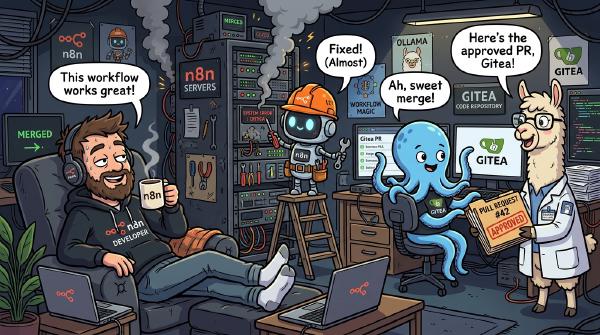
Lazy homelab engineering response: Build an automated n8n + Vector + Ollama AI pipeline that catches the crash log, diagnoses the root cause, writes the code patch, creates a Git branch, opens a Pull Request, and pings your phone on Discord so you can click “Merge” without leaving bed.
Here is how I built the SRE Log Triage & Auto-PR Workflow using n8n—the premier open-source workflow automation platform.
Most normal human beings buy a single-bay Synology NAS, plug it into their router, copy their family photos over, and call it a day.
Then there are homelab enthusiasts.
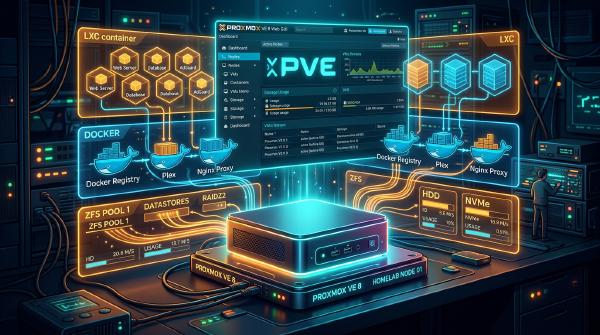
We look at a simple home network and think: “You know what this single-bedroom apartment really needs? A three-node high-availability baremetal Proxmox hypervisor cluster, enterprise-grade OPNsense firewalling, automated GitOps CI/CD pipelines, local AI LLM orchestration, and 1Password-vaulted Ansible playbooks.”
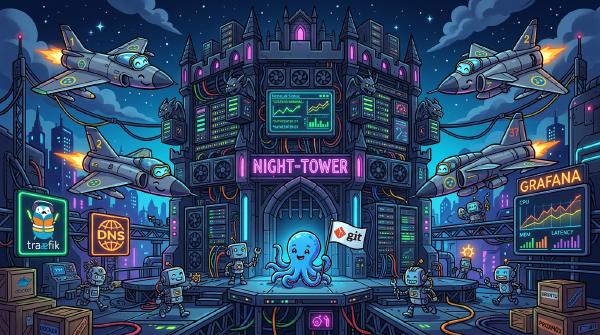
Welcome to Night-Tower—the homelab where enterprise-grade architecture meets absurd levels of over-engineering.
Stop letting great post ideas rot in your notes app. Here is how a custom Docker web app and n8n AI pipeline turn raw shower thoughts into published Hugo blog posts!
Every homelabber reaches a point where running htop and df -h in a loop simply isn’t enough anymore. When your self-hosted ecosystem grows, having real-time, historical visibility into your hardware becomes a necessity.
This is the story of my newly found love for Grafana and how I set up a robust, visually stunning monitoring stack for my personal homelab repository, night-tower.
If you are developing inside Docker containers on macOS, you’ve probably faced the dreaded, coffee-break-inducing startup times. Here is how I slashed my container spin-up times from a painful 10 minutes down to just under 4 seconds using Docker Sync.
Can you spin up a fully functioning headless CMS and configure a database in under an hour? I challenged myself to deploy Strapi.io on my lunch break, and the results were surprisingly smooth.