It is a well-established law of homelab physics: if a task can be automated, it will be automated—until it violently consumes your entire digital existence.
In our Night-Tower setup, our self-hosted Hermes Agent (containerized on docker-vm and wired to NVIDIA’s Nemotron 70B endpoint) has had exactly one job for the past six months: ruthless Site Reliability Engineering.
Hermes lives in a world of pure, unadulterated paranoia. Her brain only understands five nines of uptime (99.999%), CPU thermal throttling, killing runaway memory leaks with SIGKILL -9, and screaming into our private Discord channel whenever a ping packet dares to take longer than 2.4 milliseconds.
So, naturally, when I got tired of scrolling through the endless dystopian wasteland of modern DevOps job listings demanding 70 job titles, I had a brilliant 2:00 AM homelab idea:
“Hermes, write a browser automation script, parse LinkedIn jobs, tailor my resume to pass ATS filters, and submit applications for senior infrastructure roles. Keep it efficient.”
Twelve minutes later, my LinkedIn account was flagged for automated domestic terrorism, a Fortune 500 VP of Talent received a P0 PagerDuty escalation alert, and I was officially in the candidate pool for Chief Astronaut at NASA.
It all started with an innocent, reasonable goal on a lazy Saturday afternoon:
“I just want to test ArgoCD in my homelab.”
That’s it. Just install ArgoCD, hook up a sample repo, and watch green synchronization badges light up like a digital Christmas tree as declarative GitOps magic takes over my local Kubernetes cluster.
A 30-minute side quest. tops.
The Golden Law of Homelab Yak Shaving: No homelab project ever stays within its original scope. A simple software trial will inevitably expand until it consumes your weekend, your RAM, and your will to live.
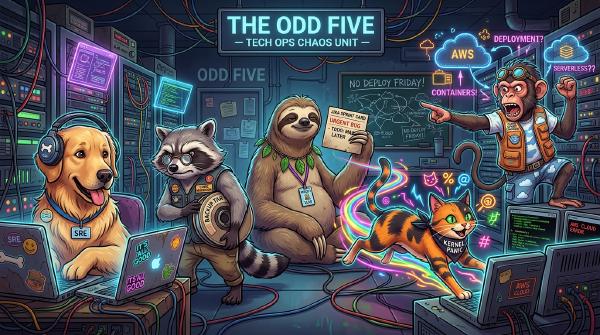
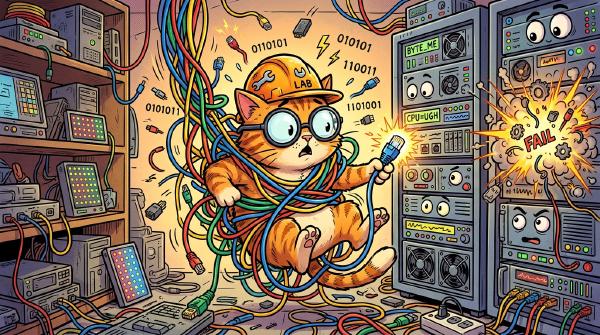
Project owners dream of a SAS-trained ops team taking down legacy servers. Reality gives you a golden retriever SRE, an ABC 80 raccoon, a sloth lead, an ADHD rainbow cat, and a cloud monkey.
When recruiters demand a single Junior DevOps engineer who knows 70 tech stacks and 14 cloud providers, the only logical response is to build your own autonomous AI agent team with blackjack and local LLMs.
Deploying Hermes Agent containerized on Docker VM with Gemini AI pair programming and NVIDIA’s mistralai/mistral-nemotron endpoint leads to sub-second inference and 3-way Spider-Man pointing chaos.
In Part 1 of our Lazy SRE Automation series, we painted a glorious, utopian vision: a world where Vector listens to container logs, n8n orchestrates workflows, Ollama writes code fixes, and you sleep soundly while Pull Requests open themselves.
It sounded majestic on paper.
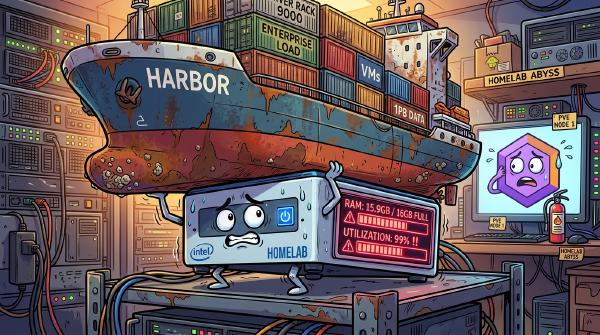
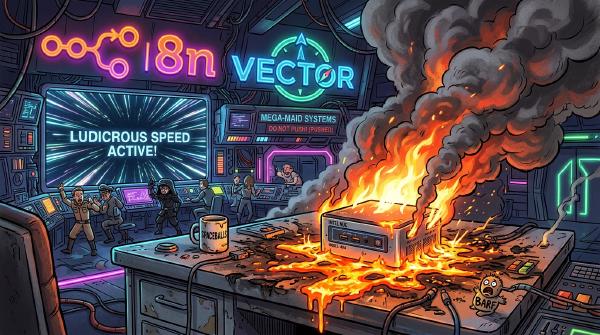
Then reality hit. And by “reality,” I mean my innocent little Intel NUC screaming in acoustic agony as its cooling fan spun at 140,000 RPM while melting into a pool of radioactive silicon.
Welcome to Spaceballs: The Log Triage. Here is everything I learned after accidentally turning my homelab into a self-inflicted Distributed Denial of Service attack.
Getting woken up by an alert at 2:15 AM because a container crashed on a port conflict is a rite of passage every DevOps engineer despises.
Standard engineering response: Wake up, open your laptop in the dark, SSH into the host, parse docker logs, realize a memory limit or port mapping is misconfigured, edit the docker-compose.yml, commit the fix, and go back to sleep angry.
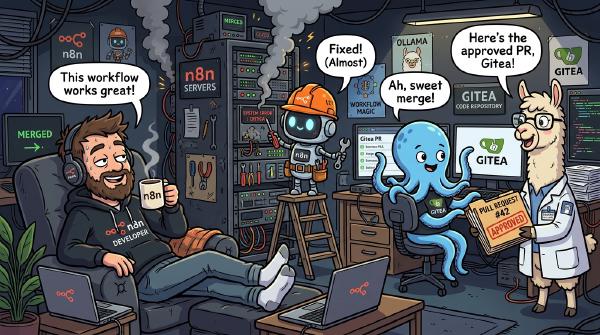
Lazy homelab engineering response: Build an automated n8n + Vector + Ollama AI pipeline that catches the crash log, diagnoses the root cause, writes the code patch, creates a Git branch, opens a Pull Request, and pings your phone on Discord so you can click “Merge” without leaving bed.
Here is how I built the SRE Log Triage & Auto-PR Workflow using n8n—the premier open-source workflow automation platform.
There is a specific kind of cold sweat known only to software engineers and database administrators.
It happens in a microsecond. You press Enter in your terminal, expect a clean 3-millisecond query response, and instead watch the terminal freeze. You glance up at your tab title and realize with horror:
You weren’t connected to staging. You were connected to production.
Most normal human beings buy a single-bay Synology NAS, plug it into their router, copy their family photos over, and call it a day.
Then there are homelab enthusiasts.
We look at a simple home network and think: “You know what this single-bedroom apartment really needs? A three-node high-availability baremetal Proxmox hypervisor cluster, enterprise-grade OPNsense firewalling, automated GitOps CI/CD pipelines, local AI LLM orchestration, and 1Password-vaulted Ansible playbooks.”
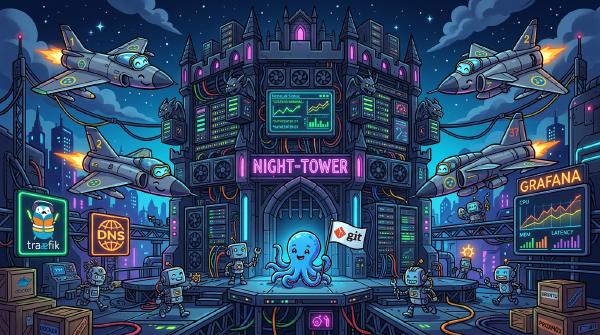
Welcome to Night-Tower—the homelab where enterprise-grade architecture meets absurd levels of over-engineering.
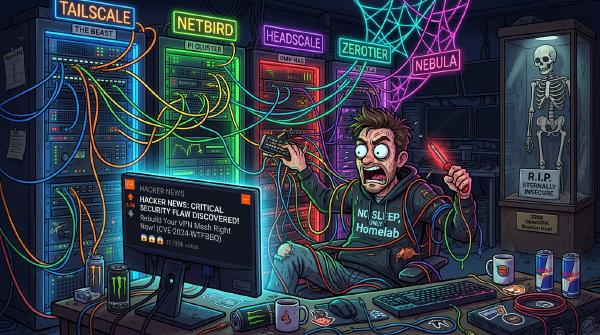
It is 11:42 PM on a Sunday. Your homelab is purring softly. The Grafana dashboards are all green, Plex is transcoding smoothly for your cousin in Ohio, and your local DNS is resolving ad-free at blistering speeds. You take a satisfying sip of tea and open HackerNews for a quick nightcap.
Then you see it.
“Show HN: Minor Telemetry Edge-Case Found in [Your Current VPN’s] Key Exchange Protocol”
Panic sets in. Your heart rate spikes to 140 BPM. Your teeth chatter. Within four minutes, you have opened a terminal, SSH’d into your core router, deleted your configuration files, and embarked on a full 3 AM infrastructure rewrite—leaving your spouse entirely unable to watch The Office on local Wi-Fi.
Welcome to the Great Homelab Mesh VPN Paranoia.
You can spend three weeks configuring strict VLAN isolation, 802.1X authentication, and enterprise-grade firewall rules. You can lock down every port, block every suspicious domain, and write a 40-page security compliance handbook.
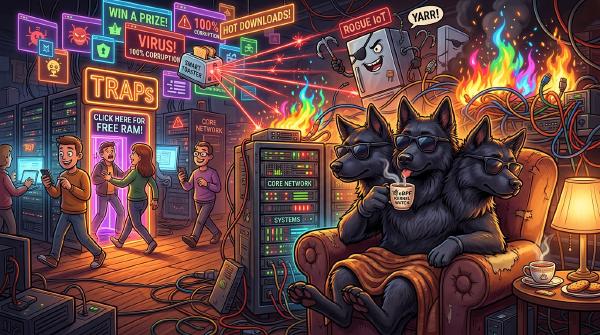
And yet, within twenty minutes of going live, a user will plug in a “smart toaster” with 2012 firmware, click a blinking banner ad promising “Free RAM Download (100% Legit)”, and walk your entire network straight into every security hole known to modern computing.
Welcome to Shadowfish: a comedic and experimental tech blog where AI models, homelab rants, and tech satire come together. Take everything here with a grain of salt!
Is it treason or enlightenment? A veteran Linux SRE explains why he finally surrendered to Windows 11 after two decades of kernel panics and dotfile maintenance.
Herdr is to AI coding agents what tmux is to terminals. Learn how to manage a fleet of local and remote AI agents across your homelab without bloaty desktop apps.
Every homelabber reaches a point where running htop and df -h in a loop simply isn’t enough anymore. When your self-hosted ecosystem grows, having real-time, historical visibility into your hardware becomes a necessity.
This is the story of my newly found love for Grafana and how I set up a robust, visually stunning monitoring stack for my personal homelab repository, night-tower.