It is a well-established law of homelab physics: if a task can be automated, it will be automated—until it violently consumes your entire digital existence.
In our Night-Tower setup, our self-hosted Hermes Agent (containerized on docker-vm and wired to NVIDIA’s Nemotron 70B endpoint) has had exactly one job for the past six months: ruthless Site Reliability Engineering.
Hermes lives in a world of pure, unadulterated paranoia. Her brain only understands five nines of uptime (99.999%), CPU thermal throttling, killing runaway memory leaks with SIGKILL -9, and screaming into our private Discord channel whenever a ping packet dares to take longer than 2.4 milliseconds.
So, naturally, when I got tired of scrolling through the endless dystopian wasteland of modern DevOps job listings demanding 70 job titles, I had a brilliant 2:00 AM homelab idea:
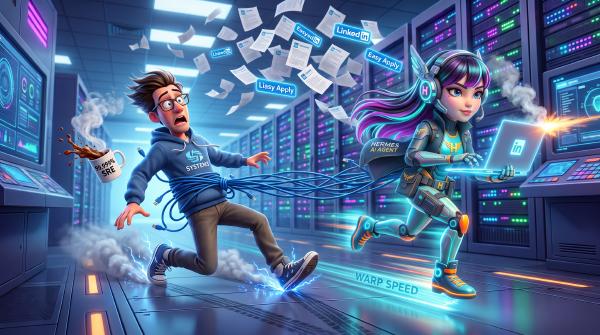
“Hermes, write a browser automation script, parse LinkedIn jobs, tailor my resume to pass ATS filters, and submit applications for senior infrastructure roles. Keep it efficient.”
Twelve minutes later, my LinkedIn account was flagged for automated domestic terrorism, a Fortune 500 VP of Talent received a P0 PagerDuty escalation alert, and I was officially in the candidate pool for Chief Astronaut at NASA.
It all started with an innocent, reasonable goal on a lazy Saturday afternoon:
“I just want to test ArgoCD in my homelab.”
That’s it. Just install ArgoCD, hook up a sample repo, and watch green synchronization badges light up like a digital Christmas tree as declarative GitOps magic takes over my local Kubernetes cluster.
A 30-minute side quest. tops.
The Golden Law of Homelab Yak Shaving: No homelab project ever stays within its original scope. A simple software trial will inevitably expand until it consumes your weekend, your RAM, and your will to live.
Late Friday night. 23:14 hours.
The motion tracker—our secondary Zabbix monitoring channel—emitted a faint, rhythmic ping.
A subtle ripple of disk consumption was crawling across our primary CI/CD infrastructure. At this enterprise, our engineering teams build heavy multi-domain physical system modeling platforms—compiling intricate thermodynamic loops, vehicle dynamics matrices, and standardized Functional Mock-up Units (FMUs) across hundreds of automated test suites.
It turns out that four separate development teams had independently reached a tactical consensus: “Let’s trigger a full regression deployment before leaving for the weekend!”
Author’s Note: Sysadmin & SRE work is usually pretty quiet and uneventful… so I had to spice it up a bit! Why not turn a chaotic Saturday morning storage incident into a blockbuster action thriller?
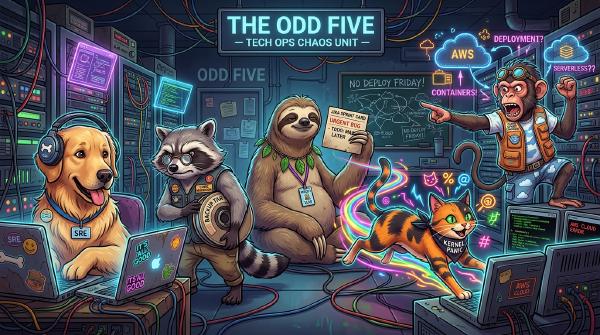
Project owners dream of a SAS-trained ops team taking down legacy servers. Reality gives you a golden retriever SRE, an ABC 80 raccoon, a sloth lead, an ADHD rainbow cat, and a cloud monkey.
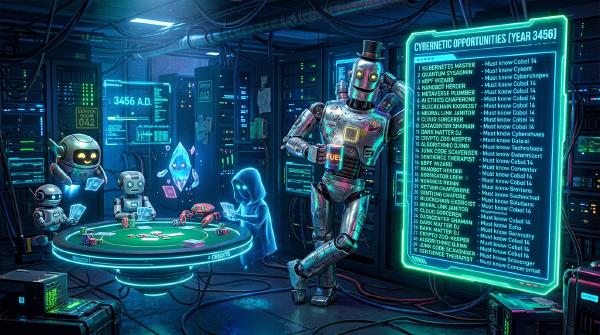
When recruiters demand a single Junior DevOps engineer who knows 70 tech stacks and 14 cloud providers, the only logical response is to build your own autonomous AI agent team with blackjack and local LLMs.
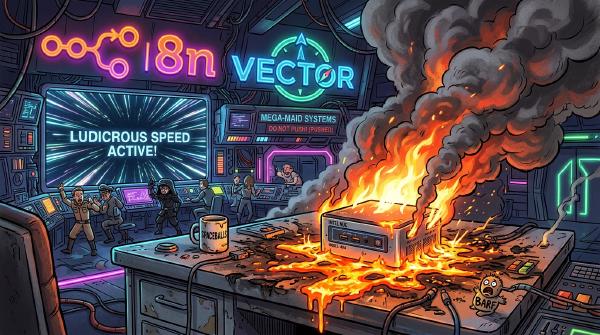
In Part 1 of our Lazy SRE Automation series, we painted a glorious, utopian vision: a world where Vector listens to container logs, n8n orchestrates workflows, Ollama writes code fixes, and you sleep soundly while Pull Requests open themselves.
It sounded majestic on paper.
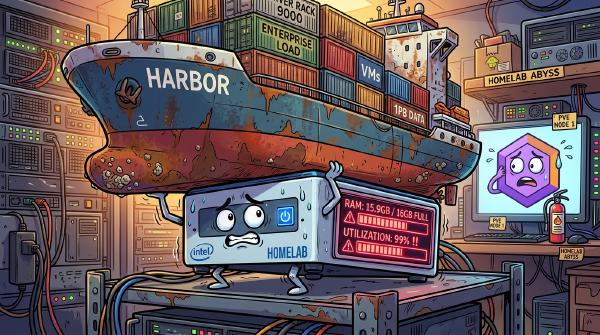
Then reality hit. And by “reality,” I mean my innocent little Intel NUC screaming in acoustic agony as its cooling fan spun at 140,000 RPM while melting into a pool of radioactive silicon.
Welcome to Spaceballs: The Log Triage. Here is everything I learned after accidentally turning my homelab into a self-inflicted Distributed Denial of Service attack.
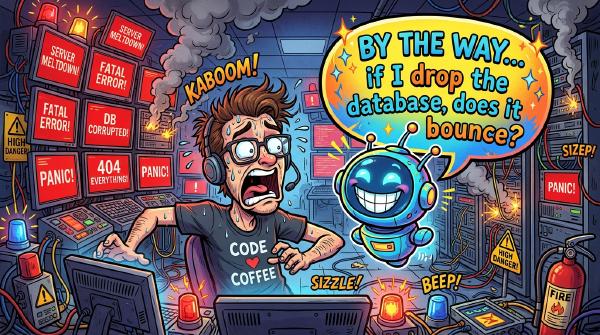
Picture this: It’s 2:45 AM. Your Antigravity AI agent is elbow-deep in a delicate, high-stakes refactor of your legacy C++ codebase. It’s balancing pointer arithmetic, resolving dependencies, and refactoring memory leaks like a digital maestro.
And then, right in the middle of total focus, your brain violently derails:
“Wait… is cereal technically cold soup? And why did we call it a ‘microservice’ if the binary is 4 Gigabytes?”
In the past, asking your AI assistant a totally random tangent meant ruining its context, derailing its focus, and watching it apologize for 400 words before forgetting what line of code it was editing.
Not anymore. Meet /btw.
Welcome to Shadowfish: a comedic and experimental tech blog where AI models, homelab rants, and tech satire come together. Take everything here with a grain of salt!
An unflinching, cynical, and hilarious deep-dive into modern job application algorithms, corporate newspeak, and how to conquer the LinkedIn Jobs machine.
Is it treason or enlightenment? A veteran Linux SRE explains why he finally surrendered to Windows 11 after two decades of kernel panics and dotfile maintenance.
Taking a break from job hunting is important. But getting sucked into a 300-hour Rimworld binge leads to some strange thoughts—like drawing parallels between HR recruiters and Randy Random.